News of Interest
|
|||||||
Aetna executive Karen S. Lynch will become CEO of CVS HealthBy Kenneth R. Gosselin and Stephen Singer, Hartford Courant
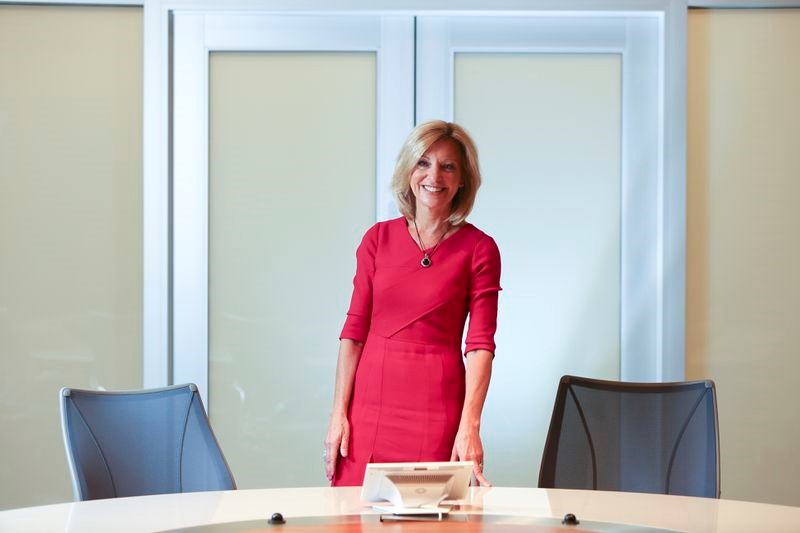
Karen S. Lynch, Aetna's top executive in Hartford, will take over as the next president and CEO of CVS Health Corp., placing her among the most high-profile female leaders not only in health care but in the business world. Woonsocket, R.I.-based CVS announced Friday that Lynch will assume the company's top post, just a few weeks shy of the second anniversary of CVS' blockbuster, $69 billion acquisition of Aetna Inc., the Hartford-based health insurer with a history in the city dating back to 1853. Lynch, 57, will succeed Larry J. Merlo, who has led CVS for a decade. Lynch will take the reins of a health care giant with a market value of $80 billion, with aspirations to play a key role in the transformation of the country's health care system.
"This leadership transition comes at the right time for CVS Health. This month marks the two-year anniversary as one company, with our foundation clearly established and significant positive momentum across the company," David W. Dorman, chairman of CVS Health's board of directors, said, in a statement Friday. Business leaders in Connecticut Friday praised the selection of Lynch, noting she is not only a strong role model for young women but all leaders. Lynch blends her business sense with a strong ability to connect with employees at all levels of the company, they said. "She's got the business acumen, that's a given when you get to that level," said Chris DiPentima, president and chief executive of the Connecticut Business & Industry Association, the state's largest business group.
When CVS acquired Aetna in 2018, its agreement with state insurance regulators in Connecticut included a promise to keep employment at Aetna and its subsidiaries at 5,300 for at least four years. Employment in Connecticut was trimmed a month ago. CVS also named Hartford as its "Center of Excellence" for insurance and committed to keeping Aetna's headquarters in Hartford for at least a decade. Hartford Mayor Luke Bronin said Lynch has been a "tremendous partner" to the city. "I look forward to continuing working with her and with CVS Health." Bronin said Friday. "Aetna has been part of the Hartford community for well over a century, and she has always been a champion for partnership between Aetna and the city it has so long called home." In Hartford, Lynch serves as a trustee for the Bushnell Center for the Performing Arts. Lynch was chosen in a "multi-year" search for a successor to Merlo, 64, that included candidates from both inside and outside of CVS. Since the combination of the two companies, Lynch has served as Aetna's president and executive vice president of CVS Health. She has been based in Rhode Island but has frequently traveled to Hartford. A regulatory filing late Friday shows as CEO Lynch will be paid an annual salary of $1.45 million. In addition, Lynch qualifies for a potential annual cash bonus of 200% of her salary. In 2021, her "target" annual equity award compensation will be $11 million, with 75% performance stock units and 25% stock options. On a call Friday morning with industry analysts to discuss CVS' third-quarter financial results, Merlo said, "Karen has been a key member of our leadership team and a key partner to me on the planning and execution of our transformational activities over the past two years." Lynch takes over as CEO at a time when CVS is at a pivotal point in its history. CVS is transitioning from a pharmacy chain with a robust pharmacy benefits management business to a broader, health services company also selling health insurance and providing health care through its community-based MinuteClinics. Lynch was unavailable for an interview with the Courant Friday. But in an interview last year, Lynch said, "To be a leader in today's world, you can't be afraid of change, or fearful of disappointing outcomes. What keeps her grounded, she said, "is believing deeply in a long-term vision. For me, it is the audacious opportunity in front of us to change the health care system as we know it."On Friday, Lynch told analysts on the earnings conference call that a major thrust of CVS' evolution will be to continue addressing "the human aspects of health." In March, Lynch assumed leadership for CVS Health's response to the COVID-19 pandemic. Born in Ware, Mass., Lynch is a graduate of Boston College and The Questrom School of Business at Boston University. Lynch has more than three decades of experience in health care. Prior to joining Aetna in 2012 and rising to president in 2015, Lynch held senior executive positions at Cigna and Magellan Health Services, where she served as president. She began her career as an auditor at Ernst & Young. Lynch traces her pursuit of career in health care back to an early age, in a 2018 column she wrote for Forbes magazine. Lynch and her three siblings were raised by an aunt after her mother committed suicide. After her aunt died, Lynch wrote about her frustration with the health care system in a 2018 column for Forbes magazine. "Ironically, I was motivated out of a sense of frustration and helplessness," Lynch wrote. "I didn't know what to ask the doctors, what to do when she was physically in pain or how to effectively navigate a confusing and complicated system of care. I wanted to prevent others from feeling the same way, and the determination I felt to improve a broken system still drives me today." In 2018, a biking accident in the Netherlands was another first-hand view at how complicated the U.S. health care system is to navigate. She broke her hip, hands and injured her ribs and flew back to the United States for surgery and follow up care at a Massachusetts hospital. Lynch told the Courant last year that she prioritizes personal time - "Build it into your schedule, just like you would a critical meeting or other appointment" - and exercises to help her decompress and maintain balance in her life.
It's really important to me, and it's not negotiable," Lynch said. "My philosophy is: If I am going to run a health care company, I'm going to stay healthy. "My philosophy is: If I am going to run a health care company, I'm going to stay healthy. Lynch serves on the board of directors of U.S. Bancorp and is involved in her husband Kevin Lynch's Quell Foundation, which strives to reduce the number of suicides, overdoses and the incarceration of people with mental health illness. Lynch has been named to numerous lists of influential business executives. For the last five years, Lynch was named to Fortune's list of the 50 Most Powerful Women in Business. [ Top of This Page ] Ex-Aetna CEO says he was pushed off CVS boardBy Kenneth R. Gosselin, Hartford Courant Mark T. Bertolini, the former chief executive of Aetna Inc. who presided over the sale of the Hartford-based health insurer to CVS Health Corp. in 2018, said Monday he was being forced off CVS’ board of directors. “I was willing to continue to serve on the board of directors in support of the most transformative effort in health care for our nation,'' Bertolini told The Wall Street Journal. "However, the board thought otherwise.” Bertolini, who assumed a seat on CVS Health’s board after the $69 billion Aetna acquisition, said the merging of the two companies is not yet complete. The “integration is far from over," Bertolini said. CVS said Monday’s announcement speaks for itself. “With the bulk of the integration behind us and the Aetna business performing strongly, the board felt it was the right time for Mark to focus on his other endeavors,” T.J. Crawford, a CVS spokesman, said, in a statement. In a release, Board Chairman David W. Dorman thanked Bertolini “for his contribution to the successful integration of Aetna.” Bertolini’s statement to The Wall Street Journal is unusual for a corporate board member. Certainly known for his outspoken style, Bertolini does not go so far as being a loose cannon, one analyst said. The statement also isn’t likely to be sour grapes, the analyst said. Monday’s announcement by CVS comes amid a broader move by CVS to reduce the size of its board from 16 to 13 directors. Investors didn’t appear too concerned after Bertolini’s comments, however. Shares in Woonsocket, R.I.-based CVS fell just 89 cents, or 1.3%, Monday to close at $66.93 on the New York Stock Exchange. Bertolini reportedly reaped $500 millin following the sale of Aetna to CVS, ceding the chief executive post after the acquisition was complete. CVS CEO Larry Merlo became chief executive of the merged CVS-Aetna. CVS’s Aetna unit has about 6,000 employees locally in Hartford. Although CVS has declared the integration of the two large companies a success, Wall Street analysts following the combined companies have said the biggest challenges to bringing CVS and Aetna together would not take place in the first year. They noted health insurance contracts were already in place when the acquisition took place. How the combined companies are going to manage the business versus how Aetna historically managed them would surface in 2020 and 2021, the analysts said. At the same time, the merged companies have aggressively pushed forward laying the groundwork for a vision CVS says has the potential to transform the health care industry and help put the brakes on the soaring costs for care. In June, CVS announced that it would retrofit 1,500 of its pharmacies across the country to incorporate “HealthHUBs” to provide more health care services in the next two years. The push comes after opening 50 in Houston, Tampa, FL, Atlanta and Philadelphia this year. HealthHUBs expand on the the strategy of CVS’s walk-in MinuteClinics to make CVS locations a true health care destination, going well beyond the traditional role of the pharmacy, the company says. “The HealthHUB would include a MinuteClinic with expanded capabilities to not just diagnose acute illness but to provide for management of chronic disease,” Merlo said. In an interview with The Courant in November, CVS CEO Larry Merlo said CVS strategy is built on the vision that health care has to be local and where people are, “whether it’s in the community, the home, or even now, in the palm of your hand.” But changing patient behavior might not be as easy as it might sound for a population -- especially an aging one -- that is more comfortable going to their primary care physician, analysts say. CVS announced Monday that Bertolini and two other directors would leave the board after this year’s annual meeting and would not seek re-election.
[ Top of This Page ] CEO Optimistic about Future of
|
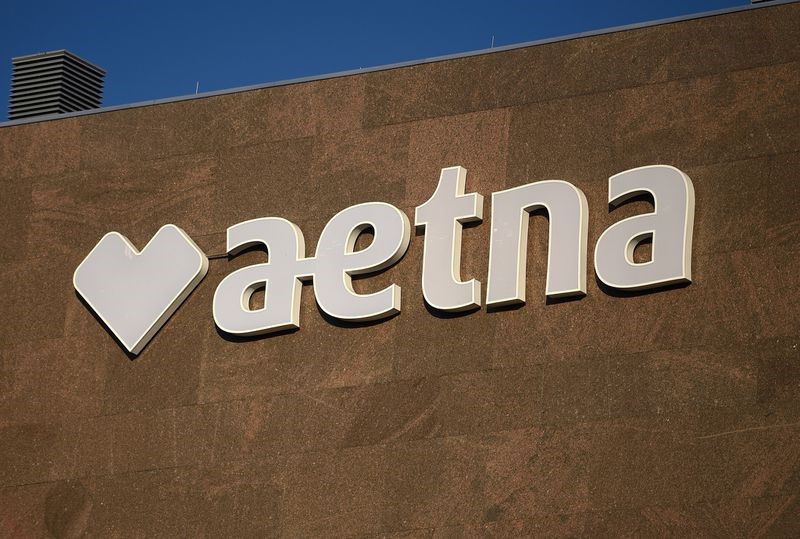
 Aetna's new corporate headquarters will be located at 61 Ninth Avenue in New york City. The company plans to begin occupation in late 2018. (Courtesy of Aetna) |
Bertolini, who spends much of his time in New York, said Aetna is looking forward to becoming an integral part of the city. "Many of the roles in our new office will be filled by innovators from the area's deep talent pool, which will be an invaluable resource as we consider additional investments in the city going forward," Bertolini said. "I thank Gov. Cuomo and his team for their partnership throughout this process, and look forward to working closely with Mayor de Blasio as we build on our role as a responsible corporate citizen."
According to Aetna, it has already established a presence in the city, including operations in Harlem.
Founded in Hartford more than 160 years ago, Aetna's departure comes a year after General Electric left for Boston and as the state is struggling to compete for jobs and young people.
Gov. Dannel P. Malloy and state legislators are currently locked in a disagreement over how to balance the state's budget, which has a projected deficit of $5 billion in coming years.
"Connecticut has a long history with Aetna and we appreciate that thousands of their employees will continue to work and live here in the state,'' a spokesperson for Malloy said Thursday morning. "While Hartford may not be New York City, we are proud of the city's revitalization. Hartford provides a strong foundation for any company in the insurance sector, large or small. From a very deep bench of top insurance talent, to incredible school systems and a high quality of life for employees, Connecticut remains the insurance capital of the world for good reason."
Hartford Mayor Luke Bronin was not immediately available for comment.
"The company remains committed to its Hartford campus and the thousands of associates based there, in addition to other established locations throughout the country and around the globe. Several of Aetna's key businesses will remain primarily based in Hartford, and the Consumer Health & Services team will continue to operate out of Wellesley, Massachusetts,'' the company said in a statement.
"Aetna's decision to call New York home is another testament to the Empire State's extraordinary economic momentum," said New York Gov. Andrew M. Cuomo in a statement provided by Aetna. "New York has a deep, diverse talent pool and pro-growth environment that businesses need to succeed, and today more companies are choosing New York to grow and diversify their business. By relocating to New York and bringing another 250 jobs to the state, Aetna is sending a clear signal that New York is open for business."
[ Top of This Page ]
Aetna Plan Would Move Headquarters
But Preserve Most Jobs Here
Hartford Courant staff writers Daniela Altimari, Russell Blair, Jenna Carlesso, Kenneth R. Gosselin, Christopher Keating, Stephen Singer and Vinny Vella contributed to this report
June 1, 2017
Aetna says it hopes to have an agreement by summer to relocate its corporate headquarters and top executives, departing after more than 160 years in Connecticut's capital city.
On Wednesday, both Gov. Dannel P. Malloy and Hartford Mayor Luke Bronin said they expect Aetna to move its corporate headquarters and top executives out of the city, most likely to New York City or Boston. Most of the company's 5,800 jobs in Connecticut are expected to remain, however.
"We are in negotiations with several states regarding a headquarters relocation, with the goal of broadening our access to innovation and the talent that will fill knowledge economy-type positions," an Aetna spokesman said in a statement Wednesday. "We remain committed to our Connecticut-based employees and the Hartford campus, and hope to have a final resolution by early summer."
Spokeswomen for New York Mayor Bill de Blasio, where the company headquarters is rumored to be heading, and Empire State Development, the state's economic development agency, declined to comment. Aetna is also talking to Massachusetts about a move to Boston, sources close to the negotiations say.
Although the insurer would likely move its headquarters elsewhere, Malloy said at an afternoon press conference he believes Aetna would keep the "vast majority" of employees in Connecticut with only "some number" of executive jobs being moved. Malloy added that the company has "an offer in front of them" that includes financial incentives to keep Aetna in Hartford. The state would also match "anything put on the table" from another state regarding a headquarters relocation.
"You can't overstate the importance of a headquarters at a company the size of Aetna and the reputation that Aetna has not only within the health insurance world, but within the corporate world generally," said Oz Griebel, head of the MetroHartford Alliance, a business group. "They're a very, very important employer."
Hartford Mayor Luke Bronin said after multiple conversations with senior leadership at Aetna, "I think it is clear that Aetna decided a long time ago to relocate their corporate headquarters out of Connecticut." "They have said that Aetna remains committed to its Connecticut workforce, and that the Hartford campus will continue to be a substantial employment base for thousands of Aetna employees," Bronin said. "But losing Aetna's flag is a hard blow for the state and for the greater Hartford region."
Despite the blow to Hartford's image, the mayor noted that Aetna would still be a "substantial presence" in the city, with thousands of workers remaining at the company's sprawling complex that stretches along Farmington Avenue and encompasses more than 2 million square feet.
Longstanding Rumors
Aetna, a Hartford icon which was founded in 1853, has been quietly searching for a new headquarters outside Hartford for the last year as concerns over the state's economic future have grown. Earlier this year Massachusetts officials said the company had been looking at real estate in Boston.
Yvonne Matthews, the head of the Asylum Hill Neighborhood Revitalization Zone, took the news of the potential departure hard Wednesday. Her group serves as the mouthpiece for the neighborhood where the insurance giant is located. The neighborhood relies on Aetna in countless ways, including for public safety through its on-site security, for revitalization, through the hand the company played in helping the Mark Twain branch of the city's public library move into West Middle School, a focal point in the neighborhood.
"I don't think people really understand what they do for us, but they do a lot," Matthews said. "They are one of the pillars in the neighborhood."
Most workers near Aetna's Farmington Avenue campus around lunchtime Wednesday said they had not been informed of a headquarters relocation. "Rumors are rumors; we don't comment on those," one worker, Avi, said between drags on his smoke break. "We'll worry about it when we see something happening."
Other employees of the insurance giant, who spoke on the condition of anonymity, tried to debunk talks of the move. One pointed out that Bertolini said at a corporate meeting last week that the company was staying put. Another worker dismissed the talk as just that. "It's business as usual for me," he said. "They say this every year. Weren't we supposed to move to Boston last year? How'd that work out?"
Incentives From Connecticut
Malloy revealed Wednesday he had unsuccessfully sought to talk with Aetna CEO Mark T. Bertolini about the company's future presence in Hartford. In March, amid speculation that Aetna would relocate its headquarters, Malloy wrote to Bertolini asking for a meeting. Two weeks ago he again wrote to Bertolini and offered a package of economic incentives including loans, grants and tax credits to keep Aetna's headquarters in Connecticut. In the letter Malloy acknowledged Aetna's concern about the state's financial footing.
"I know you are frustrated with the fiscal problems and leadership of our state," he wrote. "I am frustrated also. As a huge Connecticut employer and a pillar of the insurance industry, it must be infuriating to feel like you must fight your home state policymakers who seem blind to the future while you diligently lead Aetna's transformation from a fee for service health insurer to a value based health care leader."
Bertolini did not respond to either letter. Malloy said he has shifted his focus away from the headquarters jobs and toward the thousands of other Aetna employees in Connecticut. "For me this is now a conversation about the thousands of employees they have in our state," he said. "Keeping those employees in Connecticut is far more important than where Aetna decides to plant its corporate flag."
The state's business and political leaders were caught off guard when Kevin Rennie, a former state legislator and Hartford Courant columnist, reported late Tuesday that Aetna was planning to move its headquarters, and a few hundred jobs to Manhattan. Business leaders and Malloy's political opponents quickly likened the potential departure of Aetna to that of General Electric, which relocated its corporate headquarters from a suburban office park in Fairfield to Boston, a move that generated numerous bad headlines for Connecticut and furthered the notion that the state is not a good place to do business.
Sen. L. Scott Frantz, a Greenwich Republican who co-chairs the tax-writing finance committee, said Connecticut would have had a much better chance of keeping the Aetna headquarters if the state had developed a better business climate in recent years. "All along, we should have been looking at a much more pro-business, pro-growth set of policies, including taxes and regulations and the attitude we've had up here at the Capitol," Frantz said Wednesday. "Every labor committee meeting that you go to, there's some cockamamie idea that's floated that scares the daylights out of business decision-makers either inside the state or outside the state."
"We run a serious risk if we don't make changes in the [business] environment," said Joe Brennan, president of the Connecticut Business & Industry Association. "All the things we've been talking about: Getting our fiscal house in order, make the state competitive ... will be paramount."
CEO Makes The Decision
But Malloy and Democrats said Aetna's departure from Hartford was more a result of underinvestment in Connecticut's cities. "We don't have to be New York or Boston to be competitive, but we have to recognize that strong, fiscally sound, culturally vibrant metropolitan areas are key to economic growth," Bronin said.
"We're starting to get there," House Speaker Joe Aresimowicz, D-Berlin, said when asked if the state was doing enough to maintain a young, well-educated workforce in Connecticut. "We can't go backwards in time and change things."
Ultimately, Malloy said, the decision to relocate headquarters rests with Bertolini. "There is no book about corporate relocation that doesn't make the following point ... where the chief executive wants to be is the most important factor," he said.
There have been rumblings about Aetna pulling out of Hartford for more than a year. In January 2016, when the company was pursuing an acquisition of Humana, Bertolini told the Louisville, Ky., Chamber of Commerce that Aetna was evaluating its real estate portfolio, "but we've made a commitment to only one community as a location for the most important part of our business, and that's Louisville."
He told shareholders at Aetna's annual meeting in Avon last year that the number of employees in Connecticut had dropped "pretty substantially" and it was no longer the company's largest site in the country. "Until further notice our corporate headquarters is in Hartford," he said.
Aetna opened its current headquarters in Hartford's Asylum Hill neighborhood in 1930, touting it at the time as the largest office building in the state.
[ Top of This Page ]
Losing Aetna Headquarters May Not Mean Losing Workers
By Stephen Singer and Jenna Carless, Contact Reporters, The Hartford Courant
June 1, 2017
The announcement Wednesday by Aetna Inc. that it's negotiating with other states to move its headquarters out of Hartford is more of a psychological blow than an economic hit, but only if the health insurer's thousands of jobs remain in Connecticut.
Aetna, a Hartford staple since 1853, said it's in talks with several states regarding a headquarters relocation, with the goal of broadening access to "innovation and the talent that will fill knowledge economy-type positions." It provided no other details.
The health insurer said it remains committed to its approximately 6,000 employees in Connecticut and at its Farmington Avenue campus, and hopes to have a "final resolution" by early summer. Aetna employed 49,500 employees as of Dec. 31, 2016.
Gov. Dannel P. Malloy told news reporters he believes the "vast majority" of Aetna's jobs will remain in Connecticut. "It is my own opinion that this has more to do with their desire to have executive leadership operate in a larger, more vibrant urban center than Connecticut can currently offer," he said. "We all know that employers, especially large employers, are attracted to city centers."
Joseph J. McGee, vice president of public policy and programs at the Business Council of Fairfield County, said Connecticut benefited from the decline of cities in the 1960s and 70s. Industry and residents fled high-crime, financially broke urban areas for suburbs such as Fairfield County.
New York, Boston and other cities have since rebounded, reducing crime, improving their finances and becoming attractive to businesses and workers. At the same time, Connecticut pursued a "suburban-led strategy," successfully promoting its financial services and insurance sector, but was "disconnected from innovation."
Hartford Mayor Luke Bronin used the news to punctuate a point he's made for months — that the state can help itself by investing in its urban centers. Hartford, struggling financially and described by city leaders as being on the brink of bankruptcy, is seeking tens of millions of dollars more in state aid next year to balance its budget.
"What we have to do as a state and as a city is look ourselves in the mirror and resolve to make the changes that need to be made," Bronin said. "I think the decision that Aetna seems poised to make reinforces the argument that we've been making for the better part of a year, which is that if Connecticut wants to remain economically competitive, we have to be a place that has strong and vibrant cities, strong and vibrant metropolitan areas, where companies can attract talent and retain talent."
McGee said Stamford has built ample housing to attract young workers who might otherwise head to New York City. But Connecticut "should be a leading force of digital change," he said.
Aetna's announcement had the affect of a piling-on on of bad news for Connecticut. Economic growth trails most of the rest of New England, the state is unable to recapture all jobs lost in the recession, and public spending continues to be slashed to keep up with falling tax revenue.
Joe Brennan, president of the Connecticut Business and Industry Association, said Aetna's decision raises familiar issues. "All the things we've been talking about," he said. "Getting our fiscal house in order and making the state competitive will be paramount."
Oz Griebel, president of the MetroHartford Alliance, the region's chamber of commerce, said a headquarters move might give other companies pause if they consider moving to Hartford. "If the move is ultimately decided and executed it will, like the GE move, create a negative perception about why," he said.
The finance and insurance sector posted 131,200 jobs in Connecticut in April, down slightly from January, but reaching the highest number in nearly four years. "We're still in decent shape," said Susan Winkler, executive director of Connecticut Insurance and Financial Services, a business association. "We are, in fact, the insurance capital of the United States."
Chief Executive Officer Mark T. Bertolini has spoken before about Aetna's Hartford headquarters. He told shareholders last year that the company was required to establish a presence in Kentucky when it sought to acquire Humana Inc., which is based in Louisville. "We had to make that commitment in order to get the merger done," Bertolini said. "Having said that, the rest of all of our real estate is under review."
The $37 billion deal was ultimately blocked in court and the two sides abandoned it.
Peter Kochenburger, a professor and specialist in insurance and consumer law at the University of Connecticut School of Law, downplayed the loss of the corporate headquarters. "Absent a significant move of jobs, it probably isn't significant," he said. "It obviously has a psychological impact even if the practical impact is pretty small."
Kochenburger cited Travelers, which left Hartford in 1993 and established its headquarters in New York, while remaining the largest employer in the city. Aetna could do the same, "but it certainly doesn't have to," he said.
Richard Pomp, a professor at the UConn School of Law, offered another explanation for corporations to set up shop in larger cities: access to major airports with direct flights not as readily available at Bradley International Airport. "It's been an embarrassment that the governor has not been more successful in getting major nonstop flights out of Bradley," he said. "It's a backwater."
Pomp said shifts in corporate headquarters have a positive impact in one respect: "It's a great opportunity to shed a lot of dead wood at the senior level," he said. "With every relocation, there's a certain amount of senior management who won't make the move."
[ Top of This Page ]
Dan Haar: Note To Aetna - Globe Columnist Is Wrong
A note to Aetna CEO Mark Bertolini
and President Karen Lynch
May 24, 2017
I saw the open letter to you, Mark, from my fellow columnist and fellow former business editor, Shirley Leung of the Boston Globe. She named Boston as a great location for your headquarters and declared, "It has been the worst kept secret in New England. You want to get the hell out of Hartford."
As the person who first reported that your headquarters was in play, my clear sense is not that you want out of the city where you've been since before the Civil War, but that you want to locate your headquarters in the best possible place for the next two generations. That could mean New York, Hartford, Boston, or perhaps Bethesda, Md., near the seat of national health policy, where you already have big operations from Coventry Health Care.
Among those and others, all no doubt offering money, Hartford should emerge victorious. Here's why:
A headquarters location decision must look way past the city of the moment. Hartford has been a hot region before and it will be again, sooner than we think, thanks in part to the miracle of demographics. This area has always been a fantastic place to live and raise a family, and as Connecticut economist Patrick Flaherty likes to say, today's millennials are tomorrow's 30-somethings.
Put another way, today's struggling housing market is tomorrow's opportunity for your young employees. And it's not like Hartford lacks critical mass in health care and insurance. Both of you rose up at Cigna, as did Meg McCarthy, Aetna's EVP for operations and technology, and Cigna is still right here. So is UnitedHealthcare, which previously employed Rick Jelinek, your EVP for enterprise strategy, and Travelers, the former employer of CFO Shawn Guertin.
Just up Farmington Avenue, UConn Health and the Jackson Laboratory have spent well over $1 billion on a research play that's attracting startup companies and making itself into a top 5 center for genomics, working with Yale.
I saw that Shirley introduced her letter to you, Mark, as "CEO of Aetna, one of the largest health insurers in the country." Well then. Perhaps you'll always need an introduction in Boston.
Here in Hartford, we know you're not mainly an "insurer" but rather a technology and management company. The other companies in the ecosystem here all understand that about themselves, too. Hartford is not your father's filing cabinet, to refute another Globe columnist.
Aetna is at the center of Hartford's revival, not only through your voluntary contribution of $50 million to the city, along with Travelers and The Hartford, but in your recent move to bring some of the work-at-home employees back to the mother ship and your presence on local nonprofit boards, which appears to have stepped up, thank you very much. Mark, this is where your Detroit upbringing comes in.
Massachusetts is seeing some of the same tax collection declines as Connecticut. Just last week, a Boston Globe reporter was snooping around Hartford, fearing, apparently, that the Bay State is heading into the same storm once the growth up there levels off.
Speaking of taxes, every location you're considering is high-tax. Boston's property tax rate, at $29 per $1,000 of assessed value, is actually higher than Hartford's when you consider the value of the buildings there. And the income tax includes a dividend and capital gains levy of as much as 12 percent.
Connecticut is actually ranked low among states when it comes to relying on business taxes, per total value of the economy. And as you well recall, the higher computing tax that rankled you exactly two years ago this week, which led you to issue a statement in frustration, did not pass and has not been proposed since.
Gov. Dannel P. Malloy's letter to the state Senate leaders a few days ago about a bill adding restrictions to the pharmaceutical benefits business should tell you that plan isn't happening anytime soon, either. There is a strong pro-business tide here in the mayor's office as well.
As for Boston, it can be amazing. But some of my close friends live there and from what I've experienced, it's getting to be like the old restaurant gag from Yogi Berra: "Nobody goes there, it's too crowded."
Life is marvelous for the General Electric folks who happen to want to live in little apartments right in the Seaport District. But if they have kids and want to live in, say, Waltham or Arlington, let alone Weston, suddenly they're finding daily hassles that make them wonder whether it was all worth the effort.
Romanticizing the bustle? Just look at Shirley's own column from 2014, looking back on her years as a Boston city resident: "There were many nights when I circled for 20 minutes or more looking for a space ... Our cars have been towed, dented, broken into - and totaled."
You're a global company and you will continue to have important centers in many cities. We know the headquarters function - maybe still in play, maybe not - includes just a few hundred people, not all 6,000 Hartford employees. The best place for them, for you, is still amid the critical mass at Aetna and in the health management industry - Hartford, where Morgan Bulkeley was mayor, head of baseball's National League and the Aetna president.
[ Top of This Page ]